
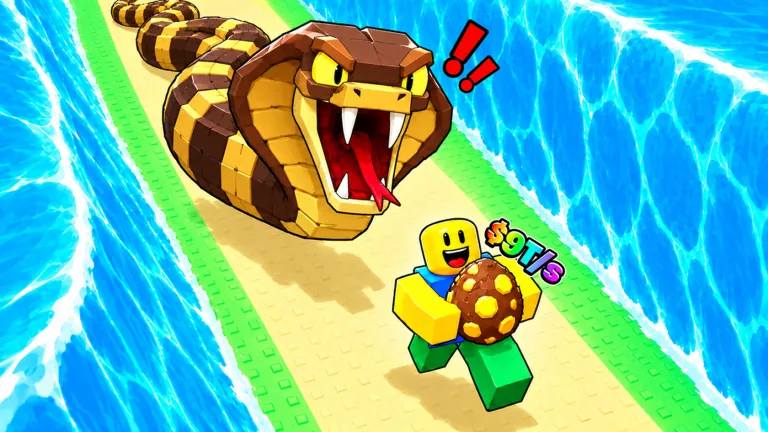
Choose the pickup and the return before leaving
Plan an Open Sea For Animals egg collection route around one egg you can reach, a path you can retrace, and a direct return to the base. Learn that short trip first. After repeated comfortable deliveries, add either another nearby pickup or a farther target, keeping the rest of the route familiar.
Choose a route you can repeat with your current character. A distant egg, an extra detour and an unfamiliar chase should not all become part of the same first test.
Build a short route with a clear purpose
The official loop requires bringing Eggs home before closing waves. Start by choosing a pickup that makes the next hatch useful without stretching your return to its limit.
Before entering, identify the direction of the base and where you will reverse course. Use recognizable features you can see in the current opening. A route that depends on stopping to search for the way home needs more preparation.
For the first version, collect the planned egg and return. This teaches you the actual outbound, pickup and return sequence before you introduce extra decisions.
| Route element | Question to answer before the trip |
|---|---|
| Opening | Does the current opening expose the planned pickup? |
| Target | Which one egg are you collecting on this attempt? |
| Outbound path | Can you identify the path without searching mid-run? |
| Pickup | Does this egg introduce a guarded encounter? |
| Return | Where do you reverse course and head toward the base? |
| Optional extra egg | Is it close to the planned path, or a separate detour? |
Use these checks to plan the trip; they do not give you a fixed spawn map. Reassess what you can actually see instead of assuming that an egg will always occupy a published coordinate.
Compare nearby pickups with farther targets
A nearby egg along your familiar path introduces less route change than one beyond your current target. If you have capacity, test the nearby option first while keeping the original turnaround and return direction clear.
A farther target changes both access and travel. Confirm that the sea opening reaches it, then treat the retrieval as a new short-route test. Do not immediately attach every nearby egg to the longer trip.
If an extra pickup requires moving away from the base after you already turned around, include that extra travel when judging the return. Leave it for another run when the return is tight. The Carry guide addresses whether extra capacity makes this planned pickup practical.
Prepare guarded eggs separately
Some pickups are associated with pursuing creatures. A T-Rex encounter at 1:37 shows why the escape is a separate part of the collection plan.
Identify the return before taking the guarded egg. If the encounter is unfamiliar, learn the path on an easier trip, then test the pickup without adding another detour. Once a chase starts, commit to the return you prepared.
Do not build the route around guessed combat damage, boss drops or a shortcut that supposedly resets the sea. The chase shows why you need an escape route. It does not tell you how every interaction with that creature works.
Expand one route variable at a time
Keep a successful version of the route as your baseline. Make one deliberate change and compare the result across several attempts.
| Change you test | Keep steady for the comparison |
|---|---|
| A farther target | Pickup count and a clear direct return |
| Another nearby egg | Original destination and opening comparison |
| A guarded pickup | Familiar return path and no extra detour |
| A Speed upgrade | The previous target and pickup count |
| Greater Carry capacity | A planned additional pickup near the old path |
If the new version repeatedly becomes rushed, return to the shorter route. You can improve equipment or reconsider the pickup without abandoning the successful routine you already have.
Record why a route failed
Separate an opening that stopped short from a return that took too long. Also distinguish extra travel from time spent choosing another egg. Those observations tell you whether to train, change the path, buy Speed or leave earlier.
Count eggs delivered across similar sessions rather than only eggs held at the deepest point. Note uncomfortable arrivals as well as outright failures. A route that succeeds once at the last moment still needs a more reliable version before becoming your default.
Use wave avoidance for the turnaround decision and Speed upgrades for the movement comparison. This guide helps you arrange the path and pickups that those decisions apply to.
FAQ
What is the best egg collection route?
Start with a short route you repeatedly finish comfortably with your current character. Expand it after the successful version is clear.
Should I always choose the farthest egg?
Choose a pickup you can deliver. A farther target is a new travel test, not an automatic improvement.
When should I add a second pickup?
Test one near the familiar path after the original trip is reliable and your current capacity supports it.
How do I plan around a guarded egg?
Learn the return before the pickup and test that encounter without another unfamiliar detour.
Are these fixed map coordinates or spawn locations?
Build and test the route from the current opening and visible pickups. These checks do not give you verified coordinates or fixed spawns.