
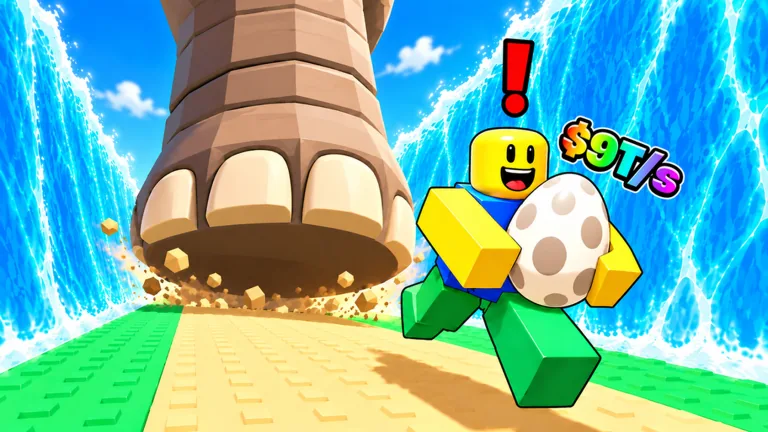
Turn back while the return still feels comfortable
To avoid closing waves in Open Sea For Animals, choose a short pickup, head home after collecting it, and leave room for the return before adding another egg. If a trip ends with a last-moment arrival, shorten it on the next attempt. Treat that arrival as a warning that your route needs more margin.
The official game description requires returning to your base before the sea waves close. Opening farther does not answer the separate question of whether you can make the trip home.
Set the turnaround before the pickup
Pick the egg you intend to retrieve while you still know the return path. Your turnaround is the point where you stop looking for a better reward and commit to the base. For an unfamiliar route, make that point the first planned pickup rather than an extra egg you notice farther away.
Watch the current opening and closing cues shown in your game. Use them alongside your own successful trips; do not borrow a fixed countdown or distance from an account with different upgrades. If an opening gives worse access than expected, repeat it or choose a closer target instead of stretching the same plan.
Finish the route you selected before looking for another reward. Looking around after picking up the egg changes the trip: it adds both travel and decision time when you already have something to bring home.
Use successful trips to build return margin
Repeat a short route before expanding it. Notice whether you reach the base comfortably or spend the entire return feeling rushed. You can also time your own outbound and return legs if that helps comparison, but that measurement describes your route and current character.
| Result of the last attempt | Change for the next attempt |
|---|---|
| Comfortable return with the planned egg | Repeat it, then consider one small extension |
| Arrival just before closing | Turn around earlier or choose a closer egg |
| Failure after taking an extra pickup | Remove that pickup and retest the original route |
| Failure on a long direct return | Shorten the target distance and evaluate Speed |
| Pickup triggers a chase you do not understand | Learn the return path on an easier trip first |
Change one part of the route at a time. A farther egg, another pickup and a different opening all at once leave you with little useful information after a failure.
Skip the extra egg when it costs your return
An additional egg can be tempting when you still have Carry space. Having Carry space lets you take another pickup; you still need to decide whether its detour fits the trip. Ask whether that pickup lies along the return you already planned.
If it sends you away from the base or forces you to search for a new path, leave it for another attempt. Build your routine around the smaller trip you can finish, rather than a load that depends on a last-second arrival.
For the separate capacity decision, read Carry upgrades. This page focuses on when to leave; the route guide focuses on choosing the path and pickups before you start.
Handle a guarded pickup as a return challenge
Some recorded pickups provoke a pursuing creature, including an egg pickup at 3:47. Plan the escape before taking a guarded egg. Once the chase starts, use the return path you already identified.
Do not stop during that run to test whether the creature can be fought or whether another interaction resets the sea. A chase adds pressure to the same return requirement. Learn the encounter through short, deliberate attempts instead of relying on an unverified shortcut.
After a failure, identify the part you can change
Check your current position, inventory and any response the game displays. Then identify whether the failure followed a late turnaround, a pickup detour, a slow direct return or a chase. Avoid assuming every failure has the same penalty or cause.
If you buy Speed, repeat the old route before reaching farther. That shows whether the upgrade improved the trip that was failing. If you can already return comfortably but cannot open far enough, examine training and staff instead; return speed alone cannot tell you why the opening stopped short.
Use the Speed upgrade test for that comparison. The aim is to finish a route reliably, then make it longer when the improvement is clear.
FAQ
What is the safest time to turn around?
On a new route, head home after the planned nearby pickup. Adjust the next trip from the return margin you actually observed.
Does opening the sea farther make the return safe?
Access and return travel are separate checks. Test the longer trip before making it your normal collection route.
Should I collect another egg if I have Carry space?
Only when that pickup fits the route and leaves a comfortable return. Capacity does not remove a detour.
Can I rely on a fixed safe countdown?
Use the live cues and your own successful trips. There is no verified universal timer here, so time the route your own account can finish.
What should I change after the waves catch me?
Identify the failed step, shorten the trip, and retest. Evaluate Speed when a direct return remains too tight.